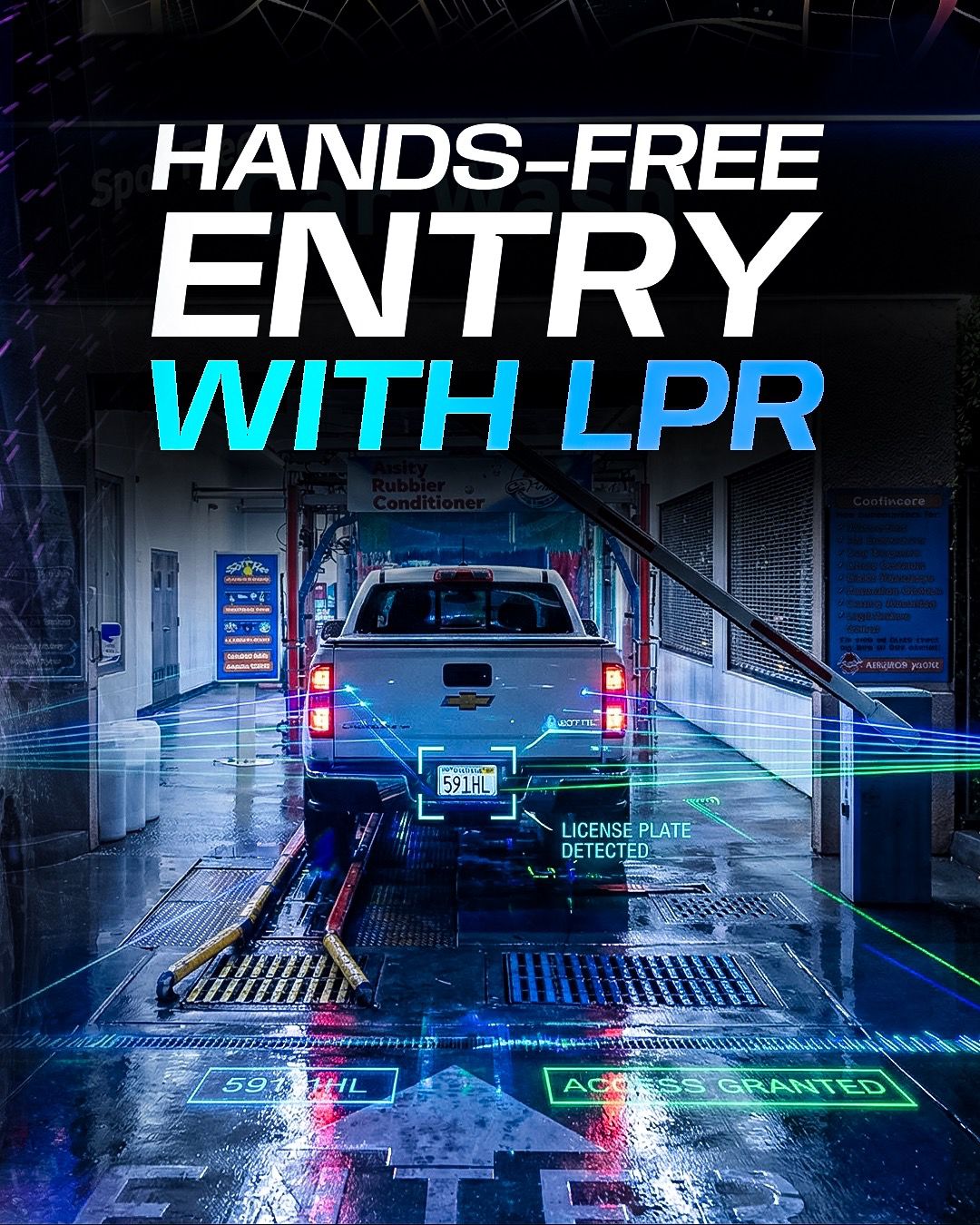
You have probably had that moment of mild satisfaction when you visit us. You pull up to the entrance, you don’t roll down your window, you don’t reach for a wallet, and magically, the gate arm lifts. You drive through. It feels simple. But as with most things that feel simple, there is a massive amount of complexity bubbling under the surface.
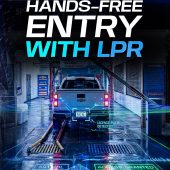
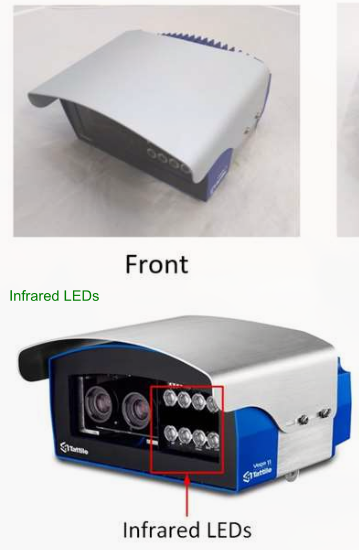
At Spotfreecar, we don’t just use standard security cameras to check you in. We utilize a highly specialized piece of hardware called the Tattile Vega 11 FastID. It is not there to take pretty pictures of the sunset or record security footage. It is a rugged, industrial-grade tool designed for one specific job: knowing exactly who you are in a fraction of a second, regardless of the weather or lighting.
I want to take you behind the curtain and share exactly how this technology works in our business. It involves a lot more than just pointing a lens at a bumper.
It Is Not Just a Camera. It Is a Computer.
Most people think of cameras as passive devices that just record video and send it to a screen somewhere. The Vega 11 is different. It is an ANPR (Automatic Number Plate Recognition) device running its own built-in Linux operating system.
Processing at the Edge
When you pull up, the camera doesn’t just send a raw video feed to a computer in the back office and hope for the best. The processing happens right there inside the unit. It captures the image, analyzes the contrast, identifies the characters on your plate, and converts them into digital text instantly.
This is what tech people call “edge processing.” By doing the heavy lifting inside the camera itself, we reduce the lag time between your car stopping and the gate opening. The camera sends the data directly to our SiteWatch or Patheon systems, which verifies your membership and fires the gate relay. This entire sequence happens in milliseconds.
Seeing the Unseen with Infrared
One of the biggest challenges for any outdoor camera is lighting. Shadows, glare, and total darkness usually ruin image quality. If we relied on visible light, a cloudy day or a burnt-out streetlight could prevent the gate from opening.
To get around this, our system uses 8 high-power Infrared (IR) LEDs that operate at 850nm. This is a wavelength of light that your eyes cannot see, but the camera sensor loves. It means that even at midnight, the camera sees your license plate as if it were lit by a floodlight.
This illumination is crucial because we can’t rely on the headlights of the car behind you or ambient street lighting. We have to bring our own light source to ensure reliability.
The Grayscale Advantage
You might expect a high-tech camera to shoot in 4K color. Actually, the Vega 11 uses a 2 Megapixel grayscale sensor.
This is a deliberate engineering choice. Color often distracts computer vision software. A red bumper, a blue sticker, or a yellow dealership frame does not help the computer read numbers. By stripping away color and focusing purely on the intensity of light (grayscale), the sensor creates a high-contrast image where the license plate characters pop out against the background. This creates a much cleaner signal for the software to read, ensuring we get the right characters every time.
The Geometry of a Perfect Read
Installing these cameras is not as easy as screwing a mount into a wall and pointing it at the lane. The physics of light and reflection dictate exactly where we place them. If we get the angles wrong, the software gets confused by skewed letters or distorted perspectives.
The 25-Degree Rule
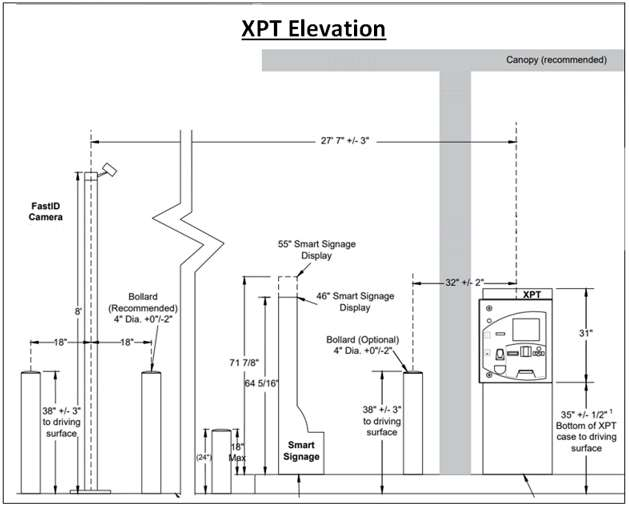
To get the highest accuracy, we follow a strict installation protocol. The camera must be mounted so that the vertical tilt and the horizontal angle to the license plate are both less than 25 degrees.
If the camera is too high, it looks down on the plate and flat letters start to look like thin lines. If it is too far to the side, the letters get squished together. We keep everything within that tight 25-degree cone to ensure the Optical Character Recognition (OCR) software gets a “flat” view of the text. This often means installing dedicated poles in specific spots on the island rather than just mounting the camera on the nearest building.
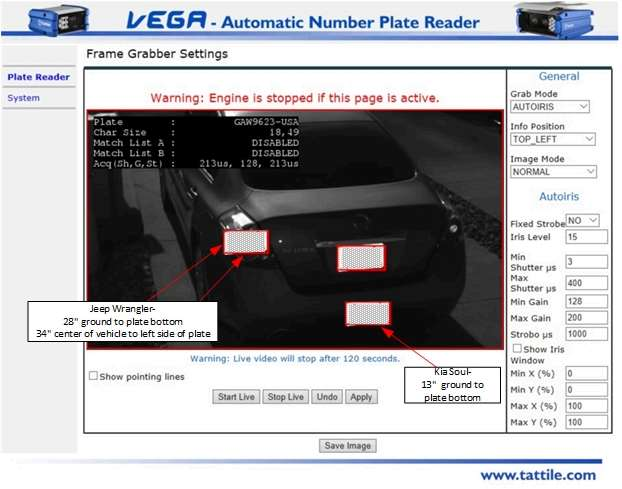
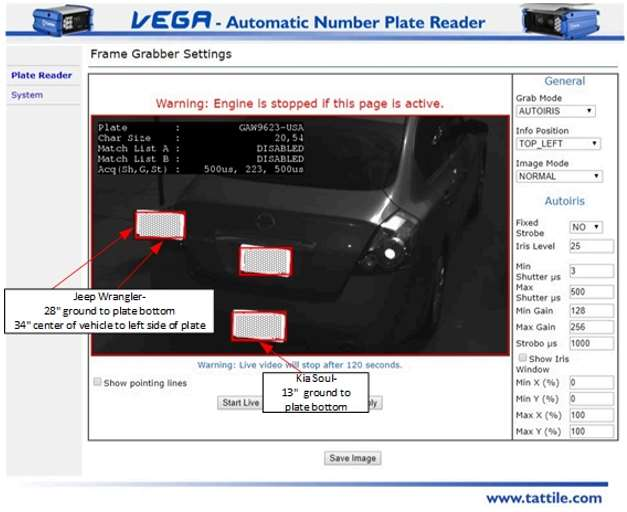
A Jeep Wrangler usually mounts its license plate way off to the far left side and about 28 inches off the ground. A Kia Soul, on the other hand, has its plate dead center but much lower, only about 13 inches off the ground.
Our technicians have to aim and calibrate the cameras to create a “sweet spot” that catches both the high-riding, off-center Jeep plate and the low-riding sedan plate without missing a beat. It is a game of averages and precision aiming to ensure no guest is left stuck at the gate.
Timing Is Everything: The Ground Loop
Have you ever wondered how the camera knows exactly when to snap the photo? It is not guessing, and it is not using motion detection, which can be unreliable in rain or snow.
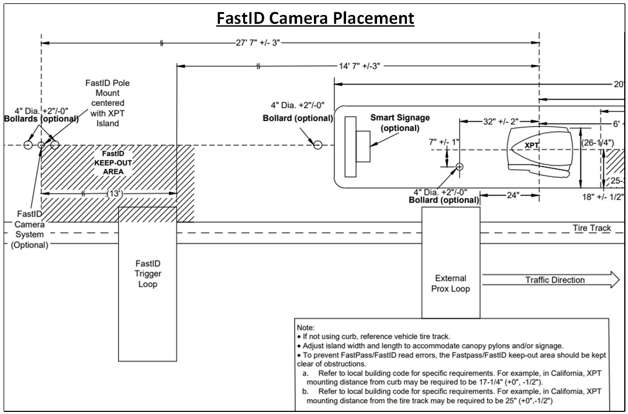
Magnetic Fields and Triggers
Buried in the concrete driveway, right before the gate, is a wire loop called a “FastID trigger loop.” This wire creates a magnetic field. When your large metal car drives over it, it disrupts that field. This is how the system knows a car is physically present in the lane.
The Exit Trigger Logic
The system is clever, though. It doesn’t take the picture when you first drive onto the loop. It waits until your vehicle exits the loop.
The system monitors the magnetic signal. When it detects a transition from ON to OFF, it knows that the front of your car has passed and the rear bumper—where your plate lives—is perfectly positioned in the camera’s focal zone. This hard-wired trigger is infinitely more reliable than visual sensors. It ensures the camera fires exactly when your plate is in the frame, reducing the chance of a blurry or missed image.
Built for the Extremes
Since these cameras sit outside 24/7, they take a beating. They are designed to operate in temperatures as low as -40°C (-40°F) and as high as +60°C (140°F). This covers everything from the coldest winter snap to the hottest summer heatwave.
Surviving the Elements
The units are completely sealed against moisture. We use specialized weatherproof cable glands to seal the ethernet connection. If moisture got inside, it would fog up the lens and corrode the sensitive electronics. We take the assembly of those connectors very seriously, often using specific torque settings to ensure a watertight seal that protects your data and our hardware.
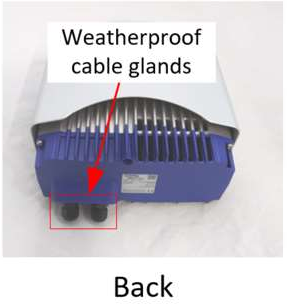
Power Over Ethernet (PoE+)
To keep the installation clean and reliable, we use PoE+ (Power over Ethernet) technology.
This allows us to run a single cable to the camera that carries both the data connection and the 25 watts of power needed to run the heater and the IR floodlights. By reducing the number of cables, we reduce the number of potential failure points. It also makes maintenance safer and easier for our team.
Smart Software and Inclusion Zones
Because the camera is so good at reading text, you might worry it reads everything, like bumper stickers, dealership logos, or even street signs in the background.
To prevent this, the software allows us to define “Inclusion Zones” or Regions of Interest (ROIs). We can draw a digital box on the configuration screen that tells the camera, “Only look for text in this specific area of the lane.”
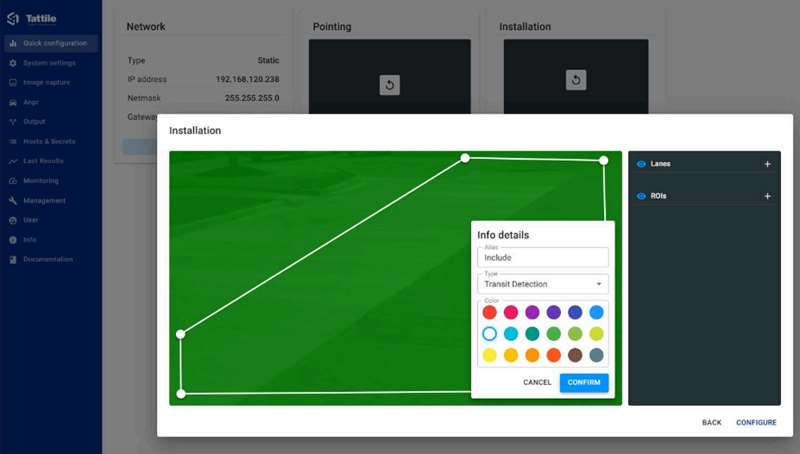
If you have a bumper sticker with text on the far left of your bumper, the camera ignores it because it falls outside the logic zone we created for license plates. This reduces “false positives” and speeds up the processing time because the computer isn’t wasting energy trying to read a “Baby on Board” sticker.
Why We Obsess Over Engineering
You might think we are overthinking a simple gate opener. But for an express car wash, speed is the entire point. We promise you a 5-minute wash, and that clock starts the second you pull onto the lot.
If we used a cheap camera, you might have to reverse and pull forward again, or roll down your window in the rain to punch in a code. That two-minute delay defeats the purpose of an express lane. By investing in the Tattile Vega 11 and installing it with this level of geometric precision, we ensure that the technology gets out of your way.
The goal is for you to forget the camera is even there. You just drive up, the gate lifts instantly, and you are on your way to a clean car. That is the beauty of good engineering.